
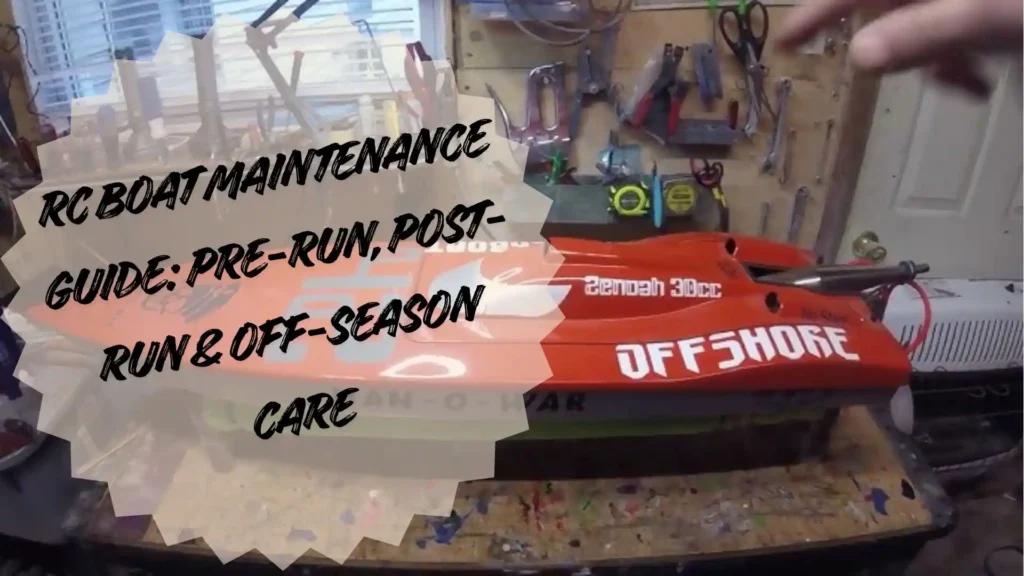
RC boats live a rough life water, vibration, high RPMs, and the occasional “oops” into the shoreline. A little neglect and suddenly you’re dealing with stripped flex shafts, soggy electronics, or a LiPo that won’t hold a charge.
The good news? With a simple pre-run, post-run, and off-season routine, you can keep your boat running strong, protect your gear, and avoid losing a day at the lake to avoidable problems.
This guide from Plateau RC & Hobby walks you through exactly what to check and when.
Why RC Boat Maintenance Matters
RC cars can coast to a stop when something goes wrong. RC boats? Not so much.
- Water is unforgiving – A small leak can soak electronics, corrode hardware, or sink the hull.
- High RPMs + load – Marine setups put huge strain on motors, ESCs, flex shafts, and batteries.
- Access is harder – If the boat dies in the middle of the lake, you’re in rescue-boat territory.
A little maintenance:
- Extends the life of motors, ESCs, and batteries
- Prevents “mystery” radio glitches caused by moisture
- Keeps speed and handling consistent from run to run
- Saves you money on replacement parts and last-minute repairs
Think of this as a checklist you can run through before and after each day on the water.
Pre-Run Checklist: Before You Hit the Water
Run through these steps before each session. It takes a few minutes and can save your entire day.
1. Battery & Power System Check
LiPo / NiMH Packs
- Make sure packs are fully charged and balanced (for LiPos).
- Inspect for swelling, dents, or damaged shrink wrap if in doubt, don’t use it.
- Verify connectors (XT60, Deans, etc.) are solid, not loose or melted.
On-Board Connections
- Check the plug from battery → ESC for a snug fit.
- Give wires a gentle tug to confirm they’re not about to pull out of solder joints.
- If you use a separate receiver pack, confirm charge and connection as well.
2. Hull & Hatch Inspection
A watertight hull is everything.
- Inspect the hull bottom and sides for cracks, deep scratches, or repairs that look suspicious.
- Check the hatch seal (foam, rubber, or tape) for:
- Gaps or tears
- Dirt or debris that might prevent a tight seal
- Make sure the hatch latches/clips are secure and not worn out.
If you tape your hatch:
- • Keep fresh tape in your field box.
- • Wipe the hull dry and dust-free before taping for a proper seal.
3. Driveline Check (Flex Shaft / Prop Shaft / Prop)
Your driveline is doing high-speed work under load – if something fails, you’re drifting.
- Spin the prop by hand:
- It should turn smoothly, with no grinding or binding.
- Check the flex shaft or solid shaft:
- Look for kinks, fraying (flex), or rust.
- Make sure the collet or drive dog is tight (but not over-tightened).
- Make sure the prop nut is secure and the prop has no major nicks or bent blades.
If anything feels rough or noisy when you spin it by hand, address it before you launch.
4. Steering & Linkage
You want full, reliable control – especially at speed.
- Turn the radio on, then the boat.
- Confirm the rudder moves freely from side to side:
- No binding, scraping, or stiff spots.
- Inspect linkages and servo horn:
- Check for cracks in the horn.
- Confirm screws and ball links are tight.
- If using dual rudders or mixed setups, make sure both are aligned correctly.
5. Radio Signal & Fail-Safe
Nobody wants a runaway boat.
- With the boat on the bench, check:
- Steering – Smooth response left/right.
- Walk a short distance away and confirm the radio still responds normally.
- Ensure fail-safe is set:
- If signal drops, throttle should go to zero and steering to neutral (or slight turn if you prefer).
6. Final Water-Ready Checks
Right before launch:
- Confirm hatch seal is seated and taped (if using tape).
- Make sure everything inside (wires, foam, etc.) is tucked away from moving parts.
- Double-check the rudder area and water pickup no weeds or debris caught.
Now you’re ready to go.
Post-Run Checklist: After Every Session
How you treat your RC boat right after a session has a huge impact on its lifespan especially if you run in dirty water or saltwater.
Power Down & Dry the Inside
- Turn off the boat first, then the transmitter.
- Remove the hatch and let the inside air out.
- Use a soft towel or paper towels to:
- Blot up any visible water or condensation.
- Pay attention around the motor mount, stuffing tube, and hull corners.
If you see a lot of water inside:
- Inspect hatch seal and tape job.
- Check rudder, water outlet, and any through-hull fittings for leaks.
Rinse (Especially After Salt or Dirty Water)
If you run in:
- Saltwater
- Murky water
- Water with a lot of plant debris
You should rinse:
- Rudder, prop, and strut
- Any exposed metal hardware
- Water pickup and outlet area
Use freshwater and avoid blasting directly at bearings or electronics. A gentle spray or rinse is enough.
Saltwater especially is corrosive – if you don’t rinse, metal parts and driveline components will rust fast.
Flex Shaft / Driveline Maintenance
A little attention here dramatically extends driveline life.
- Loosen the collet or drive assembly and pull the flex shaft out (as per your manual).
- Wipe the shaft clean with a rag or paper towel.
- Apply a light coat of marine grease or flex shaft grease, then reinstall.
- Make sure the shaft has proper clearance at the motor end (tiny gap to prevent binding when metal expands with heat).
You don’t have to do this every single run for casual use, but:
- High-power setups or long runs = more frequent greasing.
- At minimum, do it every few outings and always before storing the boat for weeks.
Cooling System Check
Water cooling keeps your motor and ESC alive.
- Blow through the water pickup line to make sure it’s clear.
- Confirm water can flow from:
- Pickup → ESC → Motor → Outlet (or your boat’s specific routing).
- After a run, feel the:
- Motor – Warm is normal; too hot to touch for more than a second is a warning sign.
- ESC – Should be warm, not scorching hot.
If temps are too high:
- Shorten run time.
- Check for kinks or blockages in cooling lines.
- Consider milder gearing or shorter prop.
Quick Electronics Check
- Inspect ESC, motor, and receiver for signs of moisture.
- If they feel damp:
- Remove the battery.
- Let everything dry completely in a warm, dry spot.
- If necessary, place electronics in a bag of dry rice or silica gel packs to help pull moisture out.
If your boat isn’t already using corrosion protection spray on metal contacts and connectors, it’s a good upgrade just avoid spraying directly inside motors or on sensor ports.
Battery Care After Running
Treat batteries right and they’ll reward you with power and lifespan.
- Let packs cool down before recharging.
- For LiPo batteries:
- Don’t store them fully charged or fully empty for long periods.
- Use storage mode (around 3.7-3.85V per cell) if you won’t run again for a while.
- Inspect leads and balance plugs for damage every time.
Off-Season Care: When Your RC Boat Takes a Break
When the weather shifts or life gets busy, your RC boat might sit for weeks or months. That’s when off-season care matters most.
Deep Clean the Hull & Hardware
- Wash the hull with mild soap and fresh water.
- Remove grime from:
- Rudder and strut
- Prop and drive dog
- Water pickups and outlets
- Dry everything thoroughly with a soft towel and let it air dry completely.
For show-piece boats, you can apply a light polish or wax to the hull (avoiding decals that aren’t clear-coated).
Full Driveline Service
- Pull the flex shaft or driveshaft completely out.
- Inspect for kinks, rust, or wear replace if questionable.
- Clean and re-grease the shaft thoroughly.
- Check bushings or bearings in the strut for smooth movement.
If you’ve been running hard all season, consider replacing inexpensive parts like shaft bushings, drive dogs, and small hardware now, so the boat is ready the moment you want to run again.
Electronics & Connections
- Inspect motor, ESC, and servo wires for:
- Brittle insulation
- Frayed spots
- Cracked solder joints
- Check connectors for green or white corrosion clean or replace as needed.
- Make sure all screws holding down ESCs, receivers, and mounts are secure.
If your receiver is not in a waterproof box, now is a great time to:
- Move it into one, or
- Add extra waterproofing with balloon/Plasti Dip-style solutions (if appropriate for your setup).
Battery Storage for the Off-Season
LiPo batteries need special attention:
- Bring all packs to storage voltage using your charger’s storage mode.
- Store them:
- In a cool, dry place
- In a fire-resistant bag, box, or LiPo-safe container
- Check them every couple of months:
- If voltage drifts too low, top up to storage voltage again.
NiMH packs:
- Store in a cool, dry place as well.
- Give them a gentle refresh charge before the new season if they’ve been sitting a long time.
Storage Position & Environment
- Store the boat in a dry, temperature-stable area not a damp basement or boiling-hot attic.
- Keep it off the floor if moisture is an issue.
- Avoid stacking heavy items on top of the hull or hatch.
- Loosen or remove straps that might warp the hull over time.
If you have kids or curious pets, a wall mount or shelf is a great way to keep your RC boat safe and on display.
Quick Reference: RC Boat Maintenance Checklist
You can turn this into a printout for your pit box.
Pre-Run
- ☐ Fully charged, healthy battery packs
- ☐ Solid connectors and no damaged wires
- ☐ Hull and hatch seal intact, hatch secured/taped
- ☐ Prop, flex shaft, and driveline spin smoothly
- ☐ Rudder and steering linkages move freely
- ☐ Radio range and fail-safe tested
Post-Run
- ☐ Boat powered off, hull opened and dried inside
- ☐ Rinsed hardware after dirty or saltwater runs
- ☐ Flex shaft cleaned and greased (as needed)
- ☐ Cooling system checked for good flow
- ☐ Electronics visually checked for moisture
- ☐ Batteries cooled and put to charge or storage
Off-Season
- ☐ Hull, hardware, and driveline deep cleaned
- ☐ Flex shaft and bearings inspected & greased
- ☐ Electronics and connectors inspected for damage
- ☐ LiPos at storage voltage in a safe container
- ☐ Boat stored in a dry, stable environment
Final Word from Plateau RC & Hobby
RC boating is way more fun when your boat just works every time you hit the water. A little maintenance becomes a habit fast and it’s a lot cheaper than replacing burned motors or waterlogged ESCs.
If you’re ever unsure about what grease to use, how to service your flex shaft, or whether your electronics are waterproof enough, the team at Plateau RC & Hobby is always happy to help you pick the right parts and products for your setup.
FAQ’S
How often should I grease the flex shaft on my RC boat?
For casual running, greasing the flex shaft every 2-3 outings is usually enough. If you’re running a high-power setup, long runs, or in dirty water, grease it after every few packs. Always regrease before storing the boat for weeks or the off-season.
Do I really need to rinse my RC boat after every run?
If you run in saltwater or dirty/murky lakes, yes—rinsing hardware with fresh water is important to prevent rust and corrosion. For clean freshwater, a quick wipe-down is often enough, but rinsing the rudder, prop, and metal parts will still help them last longer.
How hot is too hot for my RC boat motor and ESC?
Warm is normal, scalding hot is not. As a rule of thumb, if you can’t keep your finger on the motor or ESC for more than a second or two, it’s running too hot. Shorten run times, check the cooling system, and consider milder gearing or a smaller prop.
What should I do if I find water inside the hull after a run?
First, dry everything immediately with a towel and let the boat air out completely. Then check the hatch seal, tape, rudder area, water lines, and any through-hull fittings for leaks. If electronics got wet, disconnect the battery and let them dry fully before powering up again.
How should I store my LiPo batteries between boating sessions?
If you won’t use them again for a few days or more, charge LiPos to storage voltage (around 3.7-3.85V per cell). Store them in a cool, dry place inside a LiPo-safe bag or container. Avoid leaving LiPos fully charged or completely empty for long periods.
Can I run my RC boat in saltwater?
You can, but saltwater is very corrosive, so maintenance is critical. Rinse all metal hardware with fresh water immediately after running, dry the boat thoroughly, and keep up with driveline greasing. Expect more frequent maintenance than with freshwater use.
When should I visit a hobby shop instead of fixing things myself?
It’s a good idea to bring your boat to a shop like Plateau RC & Hobby when you notice:
- Persistent radio glitches or range issues
- Severe overheating that doesn’t improve after basic adjustments
- Cracks or damage to the hull structure
- Water-damaged electronics you’re unsure about
A quick in-person check can save you from replacing parts unnecessarily or risking a total failure on the water.

 ICONIER Digital Agency