
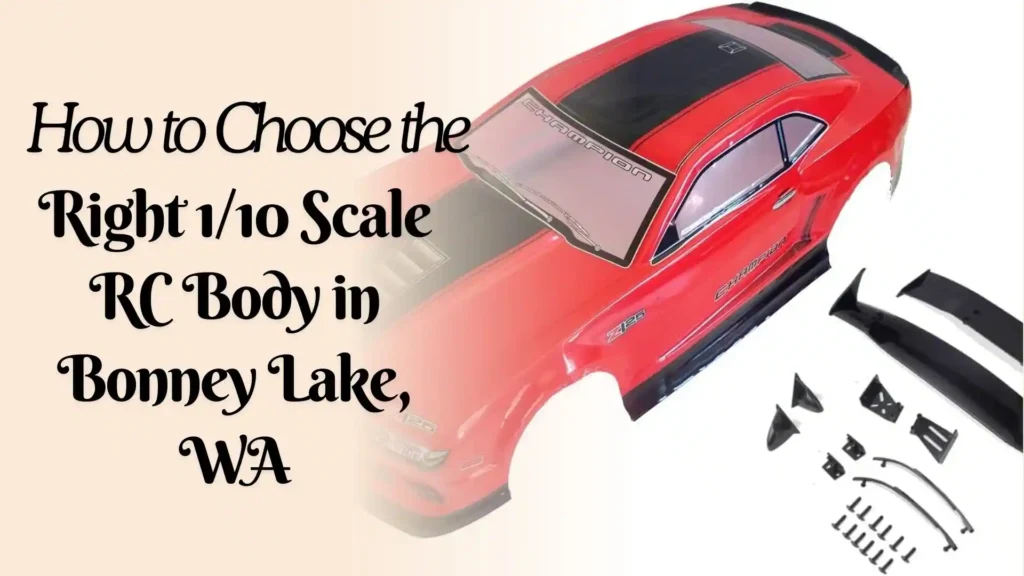
If you’ve ever shopped for a 1/10 scale RC body, you already know the wall of shells can get confusing fast. Two cars can both be “1/10 scale” and still be completely different in length and width. Pick the wrong shell and you end up with tire rub, weird wheel gaps, or a body that cracks on the first hard rollover.
For local drivers hunting for the right 1/10 RC car body around Bonney Lake, WA, a simple checklist makes the whole process way easier. This guide from Plateau RC & Hobby Bonney Lake breaks down the key steps so your next body fits, looks sharp, and matches how you drive.
What “1/10 Scale” Really Means for Your RC Body
“1/10 scale” sounds like everything should match… but it doesn’t. It’s just a ratio compared to a full-size vehicle, not a guarantee that all cars and trucks share the exact same size. Two 1/10 vehicles can sit side by side and have totally different footprints.
Most RC car bodies 1/10 land around 20 inches long with widths that can range from about 8 to 15 inches, depending on whether you’re dealing with a slim touring car or a wide monster truck. That gap alone is enough to make the wrong shell look goofy or handle poorly.
Why wheelbase & width matter most
Once you stop staring at just “scale” and focus on RC body wheelbase and width, everything starts to click:
- Wheelbase – centre of front axle to centre of rear axle
- Width – distance across the chassis or tires at the widest point
On many racing-style cars, rules even define approved body widths and wheelbases. Touring and drift classes often run bodies around 255–260 mm wheelbase and about 190–200 mm wide. That’s why a body built for a slim touring chassis may not sit right on a wide short-course truck.
Step 1: Use a Simple 1/10 RC Body Fit Guide
Grab a ruler or callipers and build your own 1/10 RC body fit guide before you ever buy a shell:
- Measure wheelbase from centre of front hex to centre of rear hex
- Measure total width at the hexes or at the outer tire sidewalls
- Note shock tower height and bumper overhang
- Take a quick photo of your chassis from the side and top
Bring those numbers to Plateau RC & Hobby Bonney Lake and match them to an RC car body size chart in-store or online. Many brands organize their bodies by wheelbase and width so you can skip the guessing game.
A little measuring now saves you from drilling holes in a shell that will never sit quite right.
Step 2: Pick a Style That Matches How You Drive
Once fit is handled, it’s time to choose the style that fits your driving. RC bodies generally fall into on-road and off-road categories, with more specific shapes under each group.
On-road racing & parking-lot speed runs
If you’re chasing lap times or clean lines on smooth pavement:
- Touring shells and drag-style bodies are your friends
- A sleek 1/10 RC drift body or GT-style shell keeps air flowing smoothly
- Narrower RC car bodies 1/10 help with quick direction changes
These bodies usually sit lower, with sculpted bumpers and aero details that help stability at higher speeds.
Backyard bashing & dirt lots
If you prefer jumps, rough ground, and big send-it energy, look toward a 1/10 RC truck body:
- RC truck bodies 1/10 often have high fenders for big tires
- Short course-style shells protect wheels and suspension arms
- Monster truck shells give a bigger footprint and a chunkier look
For Bonney Lake driveways, gravel areas, and construction-lot style bashing, a tougher 1/10 RC truck body will usually handle abuse better than a low touring shell.
Trail runs & crawling
Trail days and rock sections call for a dedicated 1/10 RC crawler body:
- Longer wheelbase options help with steep climbs
- Narrow bumpers and tapered ends reduce hang-ups
- Scale details (bumpers, cages, roof racks) add personality
A well-chosen 1/10 RC crawler body gives you clearance where you need it, without catching on every ledge.
Step 3: Choose Material, Thickness & Weight
Most modern shells are clear polycarbonate (Lexan) because it’s flexible, lightweight, and better at bouncing back from hard hits than rigid plastic.
Here’s how to think about material and weight:
- Thicker shells – Great for heavy bash sessions and high-power trucks; they shrug off rolls and cartwheels.
- Thinner race shells – Lighter, sharper handling, but they scar faster if you crash a lot.
- Crawler bodies – Often sit between the two, with extra material around rock-prone areas like rockers and corners.
Weight affects how your car leans into corners, how it lands jumps, and how it climbs. A big heavy 1/10 RC truck body might look amazing, but if you care about lap times or precise crawling, shaving some grams can feel surprisingly good on the track or trail.
Step 4: Mounting, Trimming & Details That Save You Hassle
Even the best-fitting shell can feel wrong if the mounting is rushed. Take your time on these small steps:
- Pre-drilled vs blank: If you choose a shell drilled for your chassis, mounting is faster. Blank bodies give more flexibility but need careful measuring.
- Mock-up before drilling: Sit the body on your car with wheels installed, use masking tape to mark post locations, and only then punch your holes.
- Follow cut lines: Most bodies have light cut lines melded into the plastic. Score them lightly with a hobby knife and peel away material instead of hacking with scissors.
- Check tire clearance: Turn the steering full lock, compress the suspension by hand, and make sure nothing rubs.
If you’re stuck, bring your car and uncut shell into your local RC hobby shop Bonney Lake WA and get a quick second set of eyes before you commit.
Why Local RC Shoppers in Bonney Lake Love Plateau RC & Hobby
Ordering random shells online can feel like a gamble. Shopping locally for a 1/10 scale RC body Bonney Lake WA gives you a huge advantage:
- You can test-fit bodies right on your chassis
- You see paint colors and clear shells in person instead of guessing from photos
- Staff can point you toward bodies that hold up better on the spots people actually run around here
When you search RC car bodies Bonney Lake, you’re usually not just hunting for a product—you want advice, fitment help, and maybe some setup tips too. That’s where Plateau RC & Hobby Bonney Lake comes in. Bring your rig, your measurements, and your driving goals, and walk out with a body that fits your car and how you drive.
Ready for a new shell? Drop by Plateau RC & Hobby in Bonney Lake, WA, and dial in a 1/10 RC car body that looks right, fits right, and holds up to the way you drive.
FAQs: 1/10 Scale RC Bodies for Bonney Lake Drivers
Will any 1/10 scale RC body fit my car?
No. Even if two vehicles are both 1/10 scale, wheelbase and width can be very different. Always match your chassis measurements to the body’s listed specs, or use a shop’s RC car body size chart before buying.
What’s the easiest way to check if a 1/10 RC car body will fit?
Measure wheelbase and width, then compare them to the body’s description. If the numbers are close and post locations line up, you’re usually safe. When in doubt, bring your car into Plateau RC & Hobby Bonney Lake and test bodies on the chassis before you pay.
Can I run a 1/10 RC truck body on a car chassis?
Sometimes. If the RC body wheelbase and width match your chassis and you can mount the posts cleanly, it can work. Just remember: a tall truck shell on a low touring chassis may feel tippy at speed, even if it technically “fits.”
What’s the best body type for crawling around Bonney Lake trails?
A dedicated 1/10 RC crawler body with good tire clearance, narrow bumpers, and minimal overhang front and rear. That combo lets you climb rocks, roots, and trail features without snagging the shell.
Where can I buy RC car bodies 1/10 in Bonney Lake, WA?
You can shop a wide range of RC car bodies 1/10 and RC truck bodies 1/10 at Plateau RC & Hobby Bonney Lake, your local RC hobby shop Bonney Lake WA. Bring your car, and the team can help you pick a 1/10 scale RC body Bonney Lake WA drivers already trust on local spots.

 ICONIER Digital Agency