
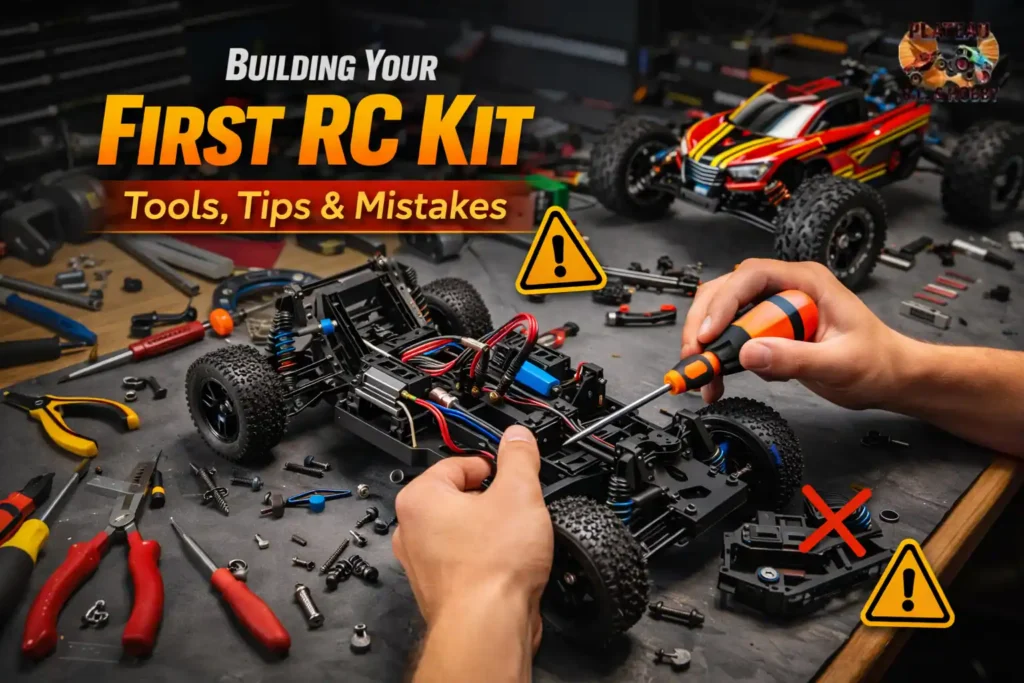
Building your first RC Kit is one of the best ways to learn the real mechanics behind RC Cars and the wider RC Hobby. Instead of just opening a box and driving, you get to understand how the chassis, electronics, drivetrain, and radio system work together. For beginners, that makes future repairs, upgrades, and maintenance much less intimidating. Plateau RC & Hobby is known for carrying RC Cars, parts, batteries, chargers, upgrades, and beginner-friendly hobby options, which makes it a strong starting point for new builders.
Why Build an RC Kit First?
- A first RC Kit teaches you more than driving.
- It teaches patience, parts identification, setup basics, and simple troubleshooting. That matters because sooner or later, every RC owner replaces a gear, adjusts steering, or checks wiring.
- A build also helps you understand how Remote Control Cars actually work. When something goes wrong later, you are less likely to feel stuck.
- For many beginners, building first is what turns casual interest into a real RC Hobby.
Types of RC Kits for Beginners
RTR vs kit
- RTR means ready-to-run.
- That is the easiest way to start driving fast. Some beginner-friendly RTR models already include the radio, battery, and charger, which reduces setup stress for first-time users.
- A true Beginner RC Kit needs assembly.
- That takes more time, but it gives you better learning value. If your goal is How to build an RC kit for beginners, a simple electric kit is usually the best place to start.
Electric vs nitro
- Electric kits are easier for most beginners.
- They are cleaner, quieter, and require less maintenance. Official hobby guidance also consistently treats electric models as more beginner-friendly than nitro or gas options.
- Nitro kits can be exciting, but they need more tuning, fuel handling, and maintenance.
- For a first build, an electric RC Kit is usually the smarter choice.
Essential Tools You’ll Need
Here is a simple Tools for building RC kit checklist.
- Phillips screwdrivers / hex drivers:- Needed for most fasteners during RC Assembly.
- Needle-nose pliers:- Helpful for clips, linkage parts, and tight spaces.
- Side cutters:- Great for trimming zip ties, body posts, and plastic tabs.
- Hobby knife:- Useful for decals, body trimming, and cleanup.
- Nut drivers or small socket tools:- Helps with wheel nuts and hardware.
- Soldering iron:- Important if your kit needs connector work or motor/ESC wiring. Good soldering practice starts with tinning both surfaces before joining them.
- Threadlock:- Use on metal-to-metal screws only.
- Parts tray or small containers:- Keeps screws and bearings organized.
Low-budget beginner alternatives
If you want basic RC Tools without overspending, start with:
- a budget driver set
- nail clippers instead of premium side cutters
- household containers for sorted hardware
- a basic soldering iron only if your kit actually requires soldering
You do not need a race-level workshop to complete a Beginner friendly RC kit assembly.
Quick Tips Box
- Read the manual once before opening parts bags.
- Build on a bright, flat table.
- Sort screws by step, not by size alone.
- Never force parts that do not line up.
- Test steering and throttle before the first drive.
Step-by-Step Guide: Building Your First RC Kit
This simple Step by step RC kit build process keeps things manageable.
1. Prep your workspace
Lay out the manual, parts bags, tools, and containers.
Check whether electronics, radio gear, battery, and charger are included. Some beginner kits need those items separately.
2. Build the chassis
Start with the chassis tub or main frame.
Follow the manual in order. Do not skip ahead just because a later step looks easier.
3. Install suspension and drivetrain
Add axles, shocks, gears, and driveshaft parts carefully.
This stage is where many new builders rush. Watch gear orientation and make sure moving parts turn smoothly before closing gearboxes.
4. Add electronics
Install the motor, ESC, servo, and receiver.
Keep wires neat. Loose wires can rub against moving parts or get pinched under the body.
5. Connect radio setup
Bind the transmitter and receiver if required.
Then check steering direction, throttle direction, and trim settings before power testing.
6. Test on the bench first
Lift the vehicle so the wheels are off the ground.
Run steering and throttle gently. Listen for grinding, clicking, or hesitation before the first real drive.
Common Mistakes Beginners Make
These are the biggest Common mistakes building RC kit builders run into:
- Skipping the manual:- Read each step before turning a screw.
- Overtightening hardware:- This can strip plastic or bind moving parts.
- Mixing screw lengths:- One wrong screw can crack parts or hit gears.
- Messy wiring:- Wires near shafts or gears cause trouble fast.
- Wrong gear orientation:- If it feels rough, stop and recheck.
- Bad solder joints:- Cold joints can fail under load. Clean, shiny joints matter for good RC kit soldering tips for beginners.
- Testing at full speed too early:- Always do a slow bench test first.
A solid RC kit assembly guide is not just about building. It is about catching small mistakes before they become expensive ones.
Tips to Make Assembly Easier
A few habits make RC Assembly much smoother.
Stay organized
Open only the bag for the current step.
Label small parts if the kit includes similar hardware. This saves time and frustration.
Use light torque
Tight is not always right.
Stop when the screw seats firmly. On plastic parts, overtightening is a common beginner mistake.
Keep a build rhythm
Build in short sessions.
Trying to finish the whole RC Kit in one rushed night often leads to missed steps.
Practice safe soldering
For RC kit soldering tips for beginners, remember this:
- tin the wire first
- tin the connector first
- apply heat cleanly
- let the solder flow, not blob
- hold the joint still while cooling
Post-Build Checklist & First Test Drive
Before your first run, do this quick check:
- steering moves left and right correctly
- throttle and brake respond correctly
- wheel nuts are secure
- suspension moves freely
- gears sound smooth
- body clears the tires
- battery is secured properly
- radio trims are cantered
Battery safety matters too.
Charge the correct battery with the correct charger, and never leave charging batteries unattended. If you are using an electric starter setup, beginner-friendly kits and systems are often easier to manage than fuel-powered alternatives.
Where to Buy Parts and Local Support
When you finish your first build, parts access becomes a big deal.
That is why many hobbyists prefer a real RC hobby store United States option over random general marketplaces. Plateau RC & Hobby highlights a broad selection of hobby-grade vehicles, parts, chargers, batteries, tires, upgrades, and repair-related support, which is exactly what new builders usually need after the first few runs.
If people are searching RC kits near me USA, Buy RC kits United States, or Beginner RC workshops near me, a specialist shop is often the best place to get honest advice, replacement parts, and setup help.
For beginners, Plateau RC & Hobby kits and parts can be especially useful because learning gets easier when you know where to find spares, batteries, upgrades, and guidance in one place.
Conclusion
Your first RC Kit does not need to be perfect.
It just needs to be finished carefully. Start simple, stay organized, and treat the manual like a teammate. That is the easiest path to confident RC Assembly, fewer mistakes, and more fun on your first drive.
If you are ready to start, Plateau RC & Hobby is a smart place to look for beginner kits, parts, batteries, tools, and practical advice. Whether you need a Beginner RC Kit, replacement spares, or help choosing your next build, their team can help you move forward with confidence.
FAQ
The best first Beginner RC Kit is usually a simple electric buggy or touring car kit with clear instructions and easy-to-find replacement parts.
Yes, if your goal is to understand mechanics. RTR is faster to start, but a kit teaches more about setup and repairs.
A screwdriver set, pliers, side cutters, hobby knife, and parts tray cover most first builds. Add a soldering iron only if your kit needs it.
Look for an electric platform, simple assembly, parts availability, clear instructions, and strong community support.

 ICONIER Digital Agency