
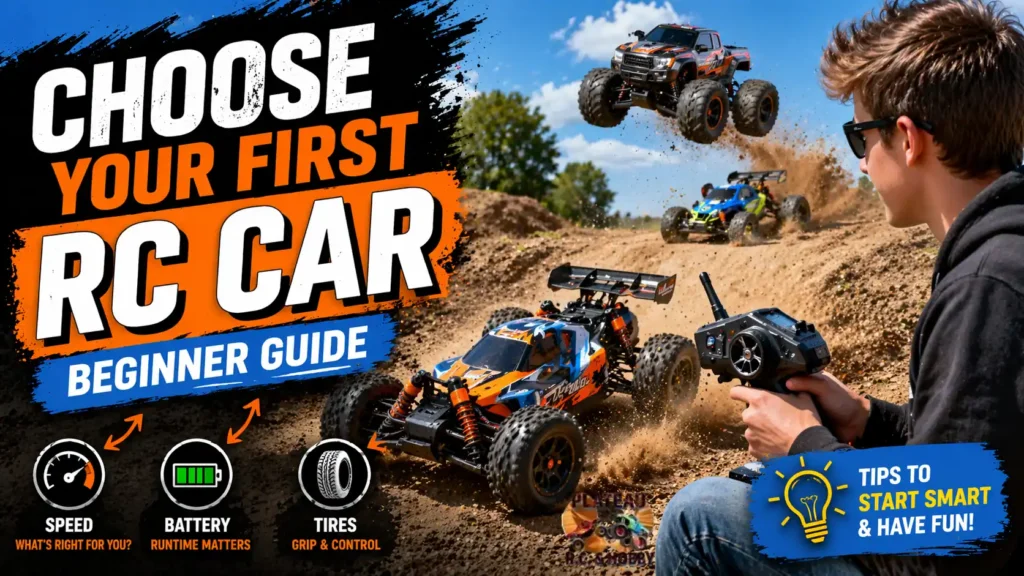
So you’ve decided to dive into the world of RC cars welcome to one of the most exciting hobbies out there. But here’s the thing: walking into a hobby shop (or browsing online) for the first time can feel overwhelming fast. Brushless motors, nitro engines, 2WD vs. 4WD, LiPo vs. NiMH it’s a lot.
Most beginners make the same mistake: they buy the flashiest car they can afford, only to realize it’s too complex, too fast, or built for terrain they don’t have. That leads to frustration, broken parts, and sometimes a very expensive paperweight sitting in the garage.
At Plateau RC & Hobby, we’ve helped hundreds of beginners find the right RC car for their needs and budget. This guide is designed to cut through the noise and give you a clear, honest path to your perfect first RC car.
What Is an RC Car? (Quick Beginner Overview)
RC stands for radio-controlled meaning you drive the car using a handheld transmitter that communicates wirelessly with the vehicle. RC cars aren’t just toys. They range from entry-level beginner models to high-performance racing machines that hit speeds over 100 mph.
People get into RC cars for all kinds of reasons: backyard bashing, competitive racing, collecting, or just having a blast with the kids on a Saturday afternoon. Whatever your reason, there’s an RC car that’s perfect for you you just need to know how to find it.
Types of RC Cars Explained
Before you spend a single dollar, you need to understand the main categories.
On-Road vs. Off-Road RC Cars
On-road RC cars are built for smooth, paved surfaces. They’re low to the ground, fast, and handle like real race cars. If you plan to drive in parking lots, smooth driveways, or indoor tracks, an on-road car could be a great fit.
Off-road RC cars like buggies, truggies, and monster trucks are built to handle dirt, gravel, grass, and rough terrain. These are typically more durable and versatile, making them one of the best choices for an RC car for beginners who aren’t sure where they’ll be driving most.
Our recommendation: Start with an off-road model. They’re forgiving, fun, and handle most environments you’ll encounter.
Electric vs. Nitro RC Cars
This is one of the biggest decisions you’ll make.
Electric RC cars run on rechargeable battery packs. They’re quieter, cleaner, easier to maintain, and ready to run almost immediately. Most beginner-friendly models are electric for good reason there’s no fuel mixing, no glow plugs to worry about, and very little tuning required.
Nitro RC cars use a small internal combustion engine powered by a methanol-based fuel. They sound incredible and have a raw, mechanical feel that many enthusiasts love. But they require significantly more maintenance, tuning, and experience to run properly.
Verdict: For beginners, electric RC cars win every time. Start electric, master the basics, then explore nitro later if the bug bites you.
Ready-to-Run (RTR) vs. Build Kits
Ready-to-Run (RTR) RC cars come fully assembled and include everything you need the car, transmitter, receiver, and usually a battery and charger. Open the box, charge it up, and you’re driving within the hour.
Build kits require you to assemble the car from scratch. They’re a rewarding experience for hobbyists who enjoy the mechanical side, but they’re not recommended for absolute beginners.
Start with an RTR. You can always build a kit later once you understand how the components fit together.
Key Factors to Consider Before Buying
Budget
Expect to spend between $100–$300 for a solid beginner RC car. Under $100, you’re usually looking at toy-grade cars with limited durability and poor parts availability. Over $300, you’re entering hobby-grade territory that may be more car than you need right now.
Factor in extras too: extra batteries, a quality charger, and basic spare parts (bumpers, tires, servo saver) are worth budgeting for upfront.
Skill Level
Be honest with yourself. If you’ve never driven an RC car before, don’t buy a 60+ mph speed demon on day one. A car that’s controllable and predictable will teach you more and be more fun in the long run.
Terrain
Where are you actually going to drive? Backyard grass? A paved neighborhood? A dirt trail? Match the car to the terrain. Buying an on-road car for a gravel backyard is a recipe for frustration.
Speed vs. Control
Faster isn’t always better especially when you’re learning. A car that does 20–30 mph is plenty fast for a beginner and far easier to control than one pushing 50+ mph.
Battery Life and Charging Time
Most beginner electric RC cars offer 20–30 minutes of run time per charge. Some higher-end models push closer to 45 minutes. Look for cars that use commonly available battery types, and consider buying a second battery pack so you can swap and keep driving while one charges.
Durability and Parts Availability
This is often overlooked by first-time buyers. RC cars crash it’s part of the fun. Make sure replacement parts are easy to find and affordable. Stick with established brands that have a strong parts ecosystem.
Best RC Car Features for Beginners
When comparing models, look for these key features:
- Waterproofing or water resistance protects against wet grass, puddles, and unexpected rain
- Low center of gravity improves stability and handling at higher speeds
- Brushless motor (optional but great) more efficient and powerful than brushed motors, with fewer maintenance needs
- Full ball bearings smoother, faster, and more durable than bushings
- Adjustable suspension lets you tune the ride for different terrains
- Readily available spare parts from your local hobby shop or online
Common Mistakes First-Time Buyers Make
Learning from others’ mistakes is free so take notes.
- Buying too advanced a car too soon. A high-powered car with no training wheels is hard to control and easy to wreck. Build your skills with a beginner-friendly model first.
- Skipping maintenance. Even electric RC cars need basic care: cleaning after each run, checking screws and bearings, and inspecting tires. Neglecting this shortens the life of your car significantly.
- Choosing the wrong terrain type. An on-road car in off-road conditions will be constantly breaking. Match the car to where you actually drive.
- Ignoring the transmitter quality. The transmitter is your connection to the car. Cheap transmitters with poor range or feel make driving frustrating. RTR kits from reputable brands include solid transmitters.
- Forgetting about the charger. Slow chargers can turn a 20-minute battery into a 4-hour wait. Invest in a good quality smart charger from the start.
Recommended Beginner RC Cars (What to Look For)
Rather than pushing specific models, here’s what to look for in your first buy:
- • 1/10 scale off-road buggy or stadium truck versatile, durable, perfect for most terrains
- • Brushed or brushless electric drivetrain smooth power delivery, easy maintenance
- • 2WD for lower budget, 4WD for better traction 4WD is more forgiving on mixed terrain
- • RTR configuration everything included, no assembly stress
At Plateau RC & Hobby, we carry a curated range of beginner-friendly RC cars from trusted brands. Our team can walk you through the options in person and help you match the right car to your specific goals and budget. No sales pressure just genuine hobby expertise.
Why Buy From Plateau RC & Hobby?
Here’s what sets us apart from big-box retail and random online sellers:
- • Real RC Expertise. Our team are hobbyists themselves we race, we bash, and we wrench on RC cars. When you ask a question, you get a real answer, not a guess.
- • Hands-On Guidance. We’ll help you find the right car based on your terrain, budget, and experience level and we’ll explain why, so you learn as you go.
- • Wide Product Range. From entry-level RTR cars to advanced competition rigs, we carry models for every stage of your hobby journey.
- • Ongoing Support. Bought a car and have questions? We’re here. Need a spare part? We stock them. RC hobbying is better when you have a local expert in your corner.
- • Community Connection. We’re more than a store we’re a hub for the local RC community. Find out about local events, racing leagues, and bashing groups through us.
Beginner Tips to Get Started
You’ve bought your first RC car now what?
- • Always charge your battery fully before the first run. A partial charge can reduce battery life over time. Follow the manufacturer’s charging guidelines exactly.
- • Start slow, then push the limits. Get a feel for the steering and throttle response before you go full throttle. Know your car before you test its limits.
- • Learn basic maintenance. After every session, clean dirt and debris from the chassis, check that all screws are tight, and inspect the tires for wear. A five-minute check after each run saves you from bigger headaches later.
- • Drive in open areas first. Wide-open spaces give you room to make mistakes without crashing into walls or obstacles. As your control improves, you can navigate tighter spaces.
- • Join the community. RC hobbying is far more fun with others. Look for local clubs, online forums, and events near you. Plateau RC & Hobby can point you in the right direction.
Conclusion Time to Hit the Track
Choosing your first RC car doesn’t have to be complicated. Start with an electric RTR model in the off-road category, match it to your budget and terrain, and prioritize durability and parts availability over raw speed.
The RC hobby rewards patience, curiosity, and a willingness to learn. And once you get behind the wheel of the right car? You’ll understand immediately why so many people fall in love with it.
Ready to find your first RC car? Visit Plateau RC & Hobby and let our team help you get started the right way. Whether you’re shopping for yourself, a kid, or a family experience we’ll match you with the perfect beginner-friendly RC car, answer every question you have, and make sure your first ride is one to remember.
Stop by the shop, explore our beginner RC car collection, and take the first step into a hobby that never gets old.
FAQs Your Beginner RC Car Questions Answered
The best RC car for beginners is a 1/10 scale electric RTR off-road buggy or monster truck. It’s durable, easy to drive, versatile across different terrains, and typically available in the $100–$250 price range. Brands with strong parts availability are your safest bet.
Yes without question. Electric RC cars are quieter, easier to maintain, cleaner, and far simpler to operate. Nitro cars require fuel mixing, engine tuning, and more hands-on maintenance. Start with electric and graduate to nitro if and when you want the challenge.
A budget of $150–$250 is the sweet spot for beginners. You’ll get a hobby-grade car with decent build quality, a proper transmitter, and access to replacement parts without over-investing before you know if the hobby is right for you.
Stick to cars in the 20–35 mph range when starting out. These speeds are fast enough to be exciting but controllable enough to actually learn from. High-speed cars (50+ mph) are hard to control and expensive to repair after crashes.
2WD (two-wheel drive) cars are lighter, simpler, and cheaper. They’re great for smooth surfaces. 4WD (four-wheel drive) cars offer better traction on loose, uneven terrain and are generally more forgiving for beginners driving off-road. If your budget allows, 4WD is the better all-rounder.
RTR stands for Ready-to-Run. It means the car comes fully assembled and typically includes the transmitter, receiver, battery, and charger. You don’t need to build anything just charge and drive. RTR is the recommended choice for beginners.
Your best bet is a dedicated RC hobby shop like Plateau RC & Hobby where expert staff can guide you in person. Unlike general toy stores or big-box retailers, a hobby shop stocks quality brands, spare parts, and knowledgeable staff who actually use the products they sell.

 ICONIER Digital Agency